ISO 15189:2022 Compliance—How to Meet Section 7 Requirements in the Pre-Analytical Phase
With the update to ISO 15189:2022, medical laboratories face new and expanded requirements to ensure the quality and integrity of pre-analytical processes.
ISO 15189:2022 is the international standard for quality and competence in medical laboratories, and since December 2025 it has been the mandatory basis for accreditation. Its operational heart is Clause 7, Process requirements — and within it, Clause 7.2, the pre-examination processes. This is where most accreditation findings occur, because the pre-examination phase is also where most laboratory errors originate.
This guide walks through what Section 7 expects in the pre-analytical phase and how digital sample traceability provides the evidence auditors look for. It paraphrases the standard for clarity; always refer to the published ISO 15189:2022 and your accreditation body's guidance for exact wording.
What Changed from ISO 15189:2012
The 2022 revision is less prescriptive but more demanding in spirit. The headline shifts:
- Risk-based thinking is embedded throughout — laboratories must identify and mitigate risks to patient care across pre-examination, examination and post-examination.
- Patient focus is explicit — decisions, including sample acceptance, must consider the patient's best interest.
- Point-of-care testing is integrated into the single standard.
- Documentation is more flexible — the rigid quality-manual requirement relaxes, but everything must remain traceable.
Clause 7.2: The Pre-Examination Processes, Step by Step
Clause 7.2 follows the sample's journey. Each sub-clause maps to a concrete pre-analytical control.
7.2.1–7.2.2 General and Information for Users
The laboratory must maintain documented pre-examination procedures and provide clear information to patients and requesters — scope, preparation instructions, and factors that affect results (such as fasting or medication).
7.2.3 Examination Requests
Requests must carry enough information to ensure patient-and-sample traceability and correct test selection. Incomplete requisitions are one of the most common non-conformances, so defined completeness criteria — ideally enforced at the point of entry — matter here.
7.2.4 Primary Sample Collection and Handling
This covers pre-collection activities (patient preparation, verified identification) and the collection procedure itself. Documented, CLSI-aligned collection procedures and verified identity are the controls that prevent misidentification and collection errors.
7.2.5 Sample Transportation
The laboratory must ensure samples are transported within appropriate time and temperature limits, with packaging instructions, and must periodically evaluate the adequacy of its transport arrangements. A single temperature reading on arrival is not enough — see Beyond the Thermometer.
7.2.6 Sample Receipt
Receipt requires unequivocal traceability, documented acceptance and rejection criteria, and recording of the date, time and identity of the person receiving the sample. The 2022 standard adds a patient-interest exception: a compromised sample may be accepted if rejecting it would harm the patient, provided the issue and the decision are documented.
7.2.7 Handling, Preparation and Storage
Pre-examination handling, preparation (such as centrifugation and aliquoting) and storage must follow defined procedures with stability-based holding times, so samples remain fit for examination.
How Digital Sample Traceability Evidences Compliance
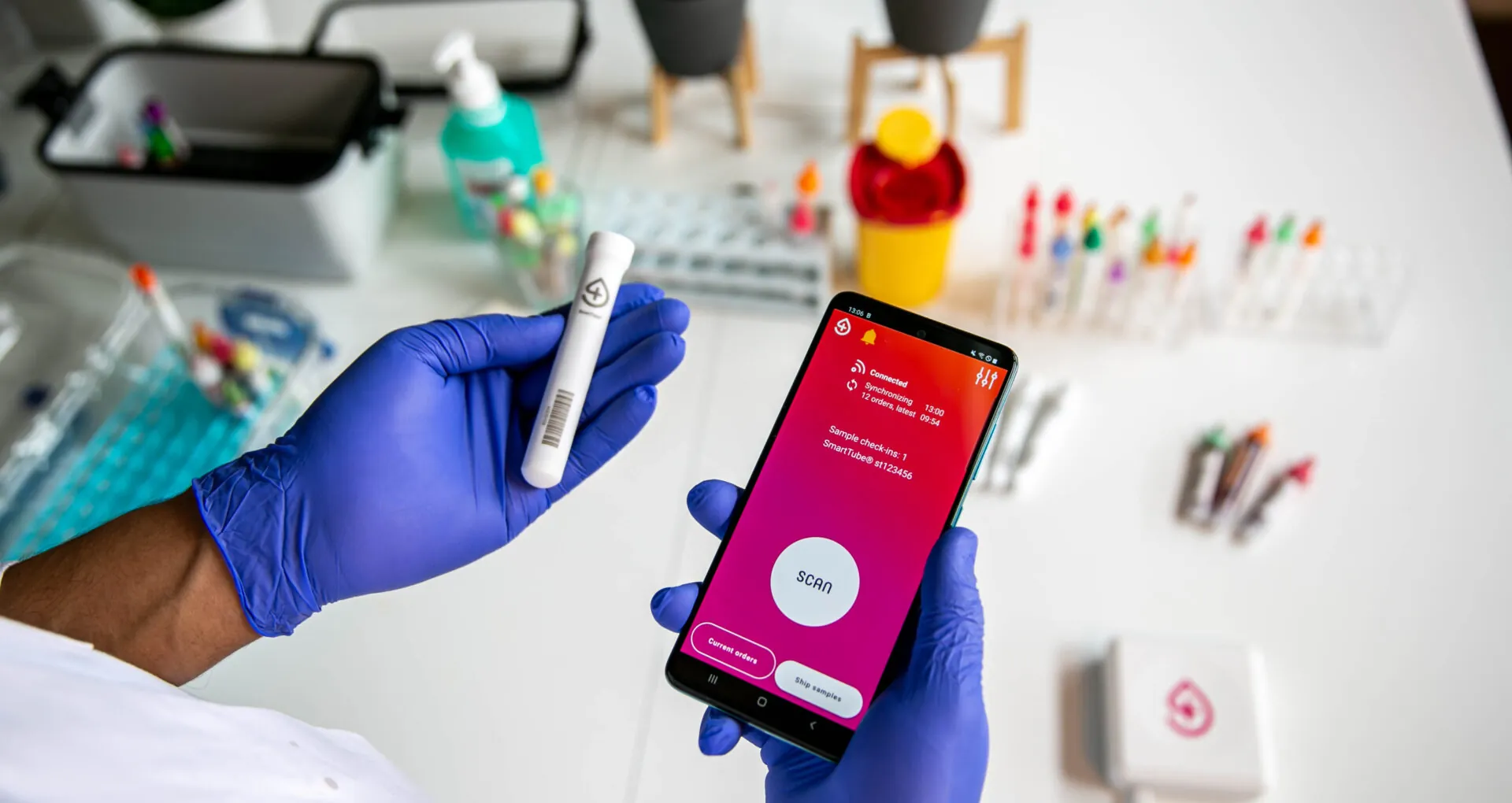
Nearly every requirement in Clause 7.2 comes down to one thing: can you prove, for any given sample, what happened and when? A digital sample tracking system produces that proof automatically:
- Chain of custody — one traceable record from request to analysis, satisfying the traceability requirement across 7.2.3–7.2.7.
- Verified identification — barcode-driven positive ID at collection, with real-time mismatch detection.
- Transport evidence — continuous time and temperature logging with excursion alerts (7.2.5).
- Receipt records — automatic capture of time, condition and handler identity, plus enforceable acceptance/rejection criteria and documented exceptions (7.2.6).
- Audit-ready reporting — one-click records and quality indicators that turn a compliance scramble into a routine export.
Where teams most often fall short on these in practice — and how to fix it — is covered in Where Labs Struggle Most with Point 7. For collection and transport specifics, see our explainer on ISO 20658.
Frequently Asked Questions
What is Section 7 of ISO 15189:2022?
Clause 7, “Process requirements,” covers the laboratory's core processes across the pre-examination (7.2), examination (7.3) and post-examination (7.4) phases, plus nonconforming work, data management, complaints and continuity. Clause 7.2 is the pre-analytical phase.
When did ISO 15189:2022 become mandatory?
The transition period for laboratories accredited to the 2012 edition ended in December 2025, after which accreditation is based on the 2022 edition. Laboratories should already be operating to it. Confirm the exact position with your accreditation body.
What are the most common pre-examination non-conformances?
Incomplete examination requests, sample identification and traceability gaps, undocumented acceptance/rejection decisions, unmonitored transport conditions, and thin risk assessments are among the most frequently cited findings against Clause 7.2.
How does sample tracking software help with ISO 15189:2022?
It automates the traceability, records and monitoring the standard expects — verified identification, chain of custody, transport condition logs, documented receipt and acceptance decisions — and produces audit-ready evidence on demand.